The aerospace industry demands components that can withstand extreme conditions while maintaining minimal weight. Enter metal spinning, a manufacturing process that delivers both strength and efficiency through a deceptively simple technique.
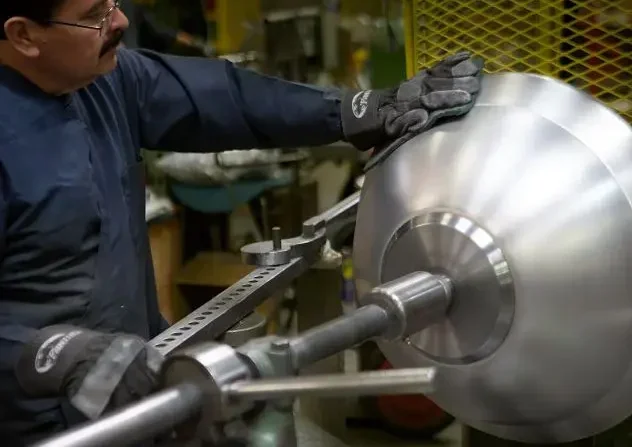
When metal undergoes the spinning process, the continuous pressure and rotation align the material’s grain structure, creating a work-hardened component with mechanical properties that surpass traditionally manufactured parts. This alignment improves strength and fundamentally changes how the metal responds to stress, creating components that resist fatigue and deformation under the punishing conditions of aerospace applications.
With its recent acquisition of Hanmar, Alpha Metalcraft Group has an additional capability to produce components with spinning. The thinner walls of components manufactured via spinning can carry the same loads as thicker traditionally formed parts, a critical advantage when every gram matters in aerospace design.
Traditional manufacturing often requires welding multiple pieces together, creating potential failure points at every joint. Spinning and AMG’s other core processes in electroforming and deep drawing eliminates this vulnerability entirely. A single piece of metal transforms into a complete component without seams, welds, or joints.
This seamless construction proves especially valuable in high-stress applications such as engine components and pressure vessels. Where a weld might crack under thermal cycling or vibration, a spun component maintains its integrity. The absence of joints also simplifies quality control; inspectors examine one continuous surface rather than multiple connection points.
The economics of spinning makes it particularly attractive for aerospace manufacturing. Unlike subtractive processes that turn valuable aerospace-grade materials into chips and shavings, spinning preserves nearly all the original material. A disc of titanium or aluminum becomes a finished component with minimal waste.
Tooling costs drop dramatically compared to other processes. Where those processes might require expensive matched dyes for each component variation, spinning uses simpler tooling that adapts to different geometries. AMG leverages this flexibility to produce both prototype runs and production quantities without the capital investment traditional methods demand.
Complex aerospace components that might require multiple operations in conventional manufacturing emerge from the spinning process in a single setup. This consolidation accelerates production timelines while maintaining the tight tolerances aerospace applications require.
The process particularly excels with symmetrical components like nose cones, combustion chambers and tank ends. What might take days of machining or multiple forming operations can be accomplished in hours on a spinning lathe. This speed advantage compounds when design changes occur; adjusting the spinning process requires minimal retooling.
Perhaps spinning’s greatest contribution to aerospace manufacturing lies in its ability to create lightweight yet robust components. The process allows engineers to specify thinner walls without sacrificing strength, directly translating to fuel savings and increased payload capacity. In an industry where reducing weight slightly can mean millions in fuel savings over an aircraft’s lifetime, this advantage proves decisive.
The aerospace industry continues to demand more from its components: greater strength, lower weight, faster production, and reduced costs. Metal spinning delivers on all fronts, transforming raw materials into high-performance parts through a process that enhances rather than compromises material properties.
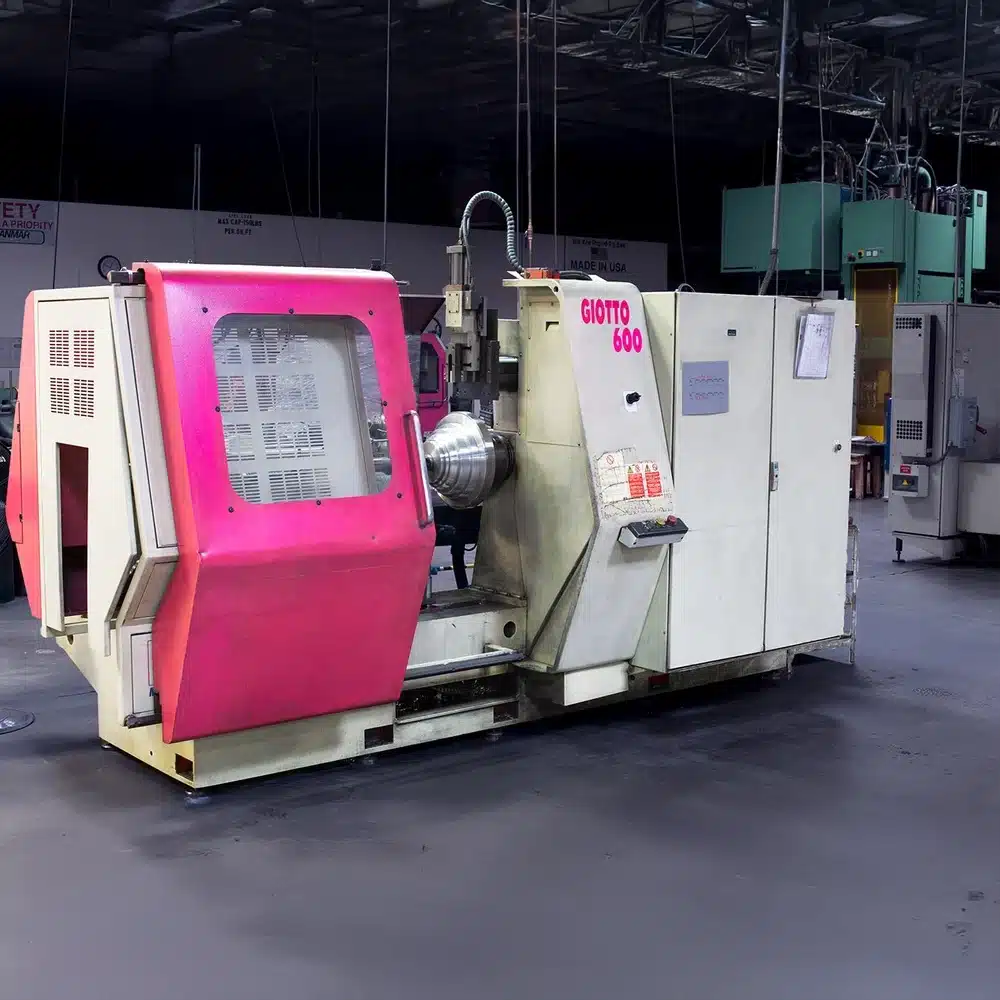
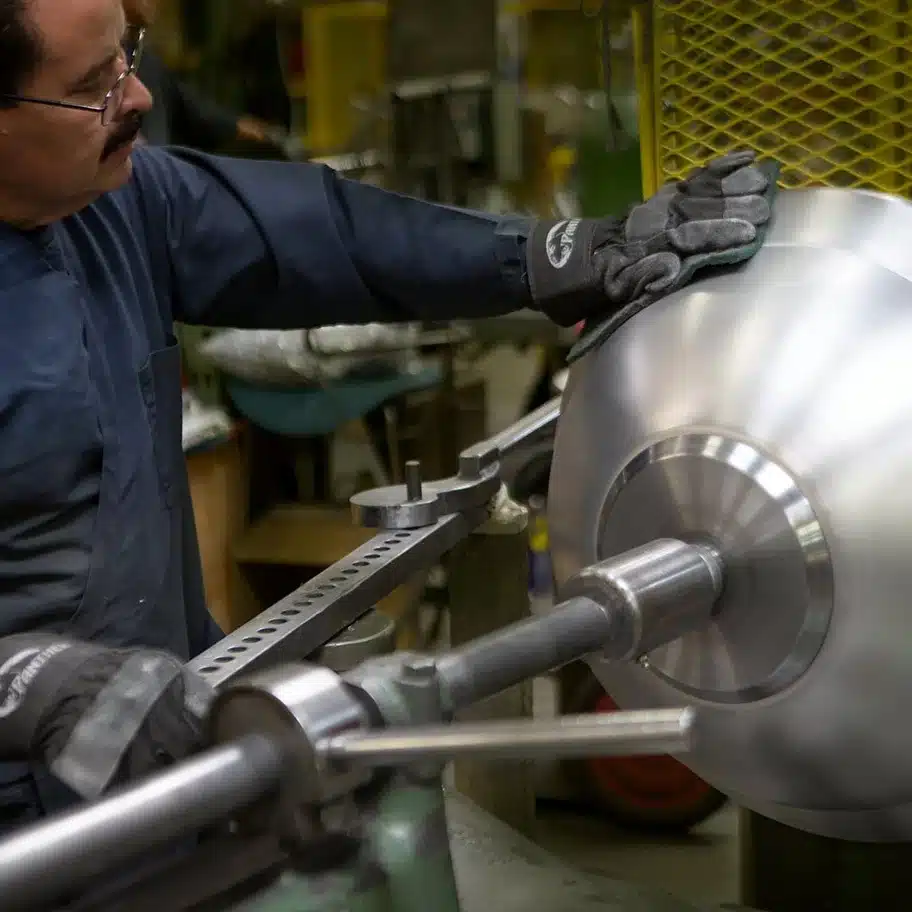
Alpha Metalcraft Group can manufacture components via manual and CNC metal spinning at its facility in Pacoima, Calif.