
Artemis II’s 10-day, 695,081-mile mission that safely returned to Earth in early April captured worldwide attention. Four astronauts traveled around the moon and back in the journey, which was the first crewed flight beyond low Earth orbit since Apollo 17 in 1972.
The mission was historic and revealing. It marked the first time four people flew in a spacecraft to the moon and included Christina Koch, the first woman to travel to the moon, and Victor Glover, the first African American to do so. The mission produced vast amounts of scientific information, everything from how space impacts human physiology and psychology to deep-space navigation milestones that will influence and accelerate preparations for the next stage of lunar exploration.
“The Artemis II test flight successfully began a new era of exploration, laying the groundwork for the third Artemis mission next year, lunar surface missions, a Moon base and future missions to Mars,’’ NASA said on its website.
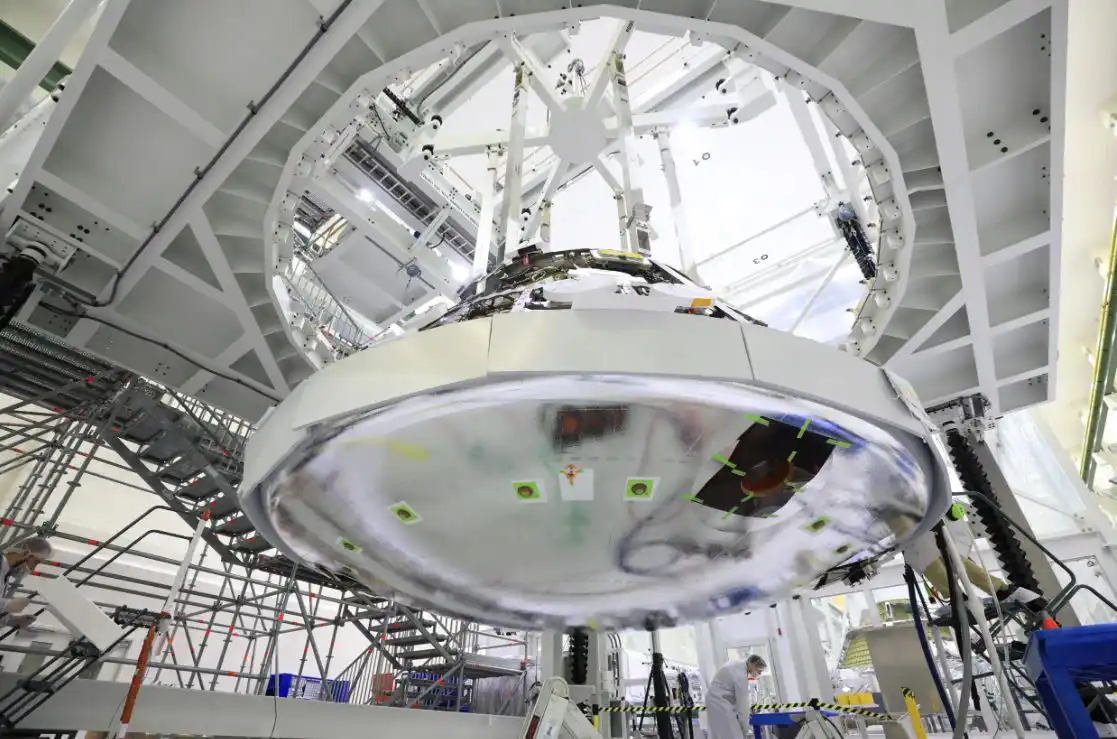
Many observers in the scientific community, and Alpha Metalcraft Group, paid close attention to the performance of heat shields. AMG produces cold shields used in missiles to protect sensitive optics, sensors and electronics, and heat shields also used in missiles to protect sensitive optics from adjacent rocket fire.
In Artemis I, engineers found unexpected erosion and cracking in its heat shields. “Engineers determined as Orion was returning from its uncrewed mission around the Moon, gases generated inside the heat shield’s ablative outer material called Avcoat were not able to vent and dissipate as expected,” NASA said. “This allowed pressure to build up and cracking to occur, causing some charred material to break off in several locations.”
The heat shield on Artemis II’s Orion capsule, which the crew named Integrity, was discussed frequently in the ramp up to the mission. Moon missions return to Earth at extreme temperatures, nearly 5,000˚ Fahrenheit, and the spacecraft hit the Earth’s atmosphere at a velocity of approximately 24,664 mph. “The blazing return speed generated extreme atmospheric compresses that tested the spacecraft’s heat shield up to 4,890˚ F,’’ according to Sky at Night magazine.
For Artemis II, NASA faced a tough decision: redesign the heat shield and delay the mission by two years or adapt the existing shield and adjust the re-entry profile to lower heat exposure. The agency chose the latter, using a more porous Avcoat formulation and a shallower re-entry path than Artemis I.
“There are 13 things that have to go right,’’ Artemis II flight director Jeff Radigan said in a TIME magazine article one day prior to the mission conclusion. “I have a whole checklist in my head that we’re going through. All these things have to happen.”
AMG’s heat shields are electroformed with copper and nickel. The company’s heat and cold shields are used in a wide range of defense applications. The Connecticut-based manufacturer also produces thrust chamber fuel-passage encapsulating “jackets” via electroforming, as well as domes and hemispheres via deep drawing and spinning for rocket engines.
The Artemis missions represent an exciting time in America’s return to space exploration, and the scientific community and manufacturers of rocket components are eager to see Artemis III race through space in late 2027.