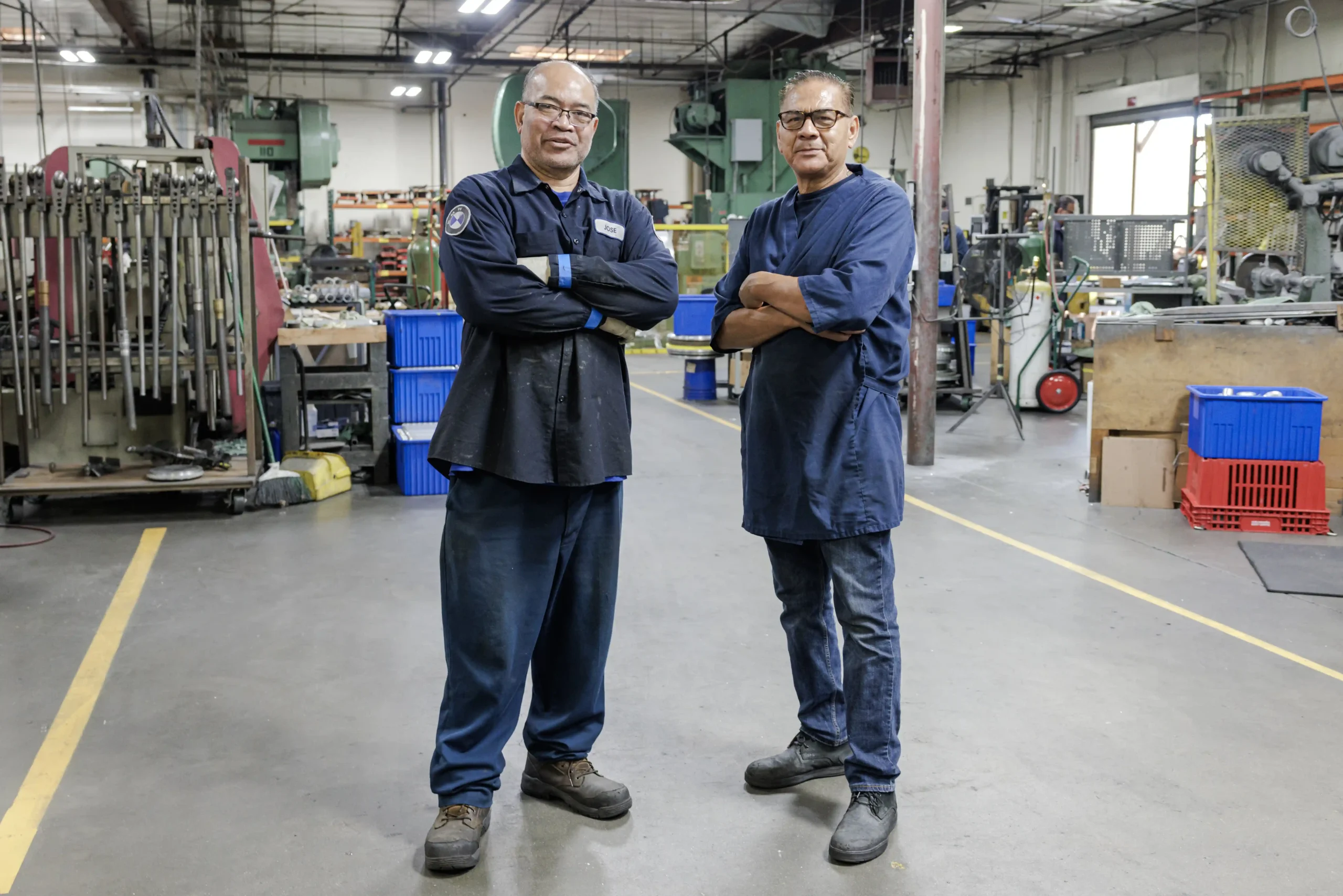
With more than 80 years of combined experience as metal spinners, Sal Espinoza and Peni Lemusu possess similar skills as they manufacture parts as members of Alpha Metalcraft Group’s team in Pacoima, Calif.
They also have similar work ethics. Both men take tremendous pride in their work as metal spinners, a time-honored craft that requires a unique blend of skills, including an artisan’s touch, exquisite vision and physical and mental stamina to maintain task concentration throughout the entire work week.
“It’s like an art,’’ Lemusu said. “You can have many different designs, many different shapes with different metals. The only way you improve is by getting experience doing it.”
Metal spinners shape big, heavy pieces of metal with equipment such as mandrels, lathe beds and rollers into pieces as large as 75 inches in diameter. The process is especially vital for defense equipment such as nose cones, fan ducts, and combustion chambers. Spinners also manufacture components for the missile, munitions and UAS defense markets, such as nose/tail cones, skins/housings, outer cases, combustor liners and exhaust nozzles and cones.
The process enables spinners to manufacture products in a wide range of materials and thicknesses in seamless and symmetrical shapes. Exotic metals and superalloys such as Inconel can be used along with steel, stainless steel, aluminum and Kovar.
Component quality lies directly in the hands of metal spinners. Lemusu, Espinoza and other Pacoima team members – most of whom have more than 20 years of experience – walk a fine line with every part they produce. If a spinner applies too little pressure, the metal does not fully contact the mandrel, which is used to hold the piece in place while it is on the lathe. The result is an imprecise part that might not meet required tolerances. Insufficient pressure can also cause buckling as the material travels toward the center of the lathe.
The job is physically grueling, requiring the physical stamina to stand for the entire workday and using muscles in the shoulders, back, arms and hands throughout the process.
“You have to rethink a lot of times to figure out what works best and how you can repeat it. You want to be consistent, and that’s very hard with metal spinning,’’ Espinoza said.
Metal spinning offers multiple manufacturing advantages. Parts are seamless, offering improved structural strength. They are able withstand higher internal and external pressures, and the process increases the tensile strength of the metal by refining its grain structure. The process also reduces material usage and provides a high-quality surface finish that reduces the need for secondary polishing. Tooling costs for metal spinning are also far less than other metalworking methods. Parts made with metal spinning also have complex and unique geometries, which are hard to produce with other manufacturing methods.
The most important part of metal spinning is finding and developing workers who can develop the right touch on a daily basis and demonstrate pride in craftsmanship.
“My first couple of questions when someone expresses an interest in metal spinning center around their mechanical ability,’’ said AMG Pacoima’s Plant Manager Leonard Sanchez. “That’s the starting point. It’s not an easy task. I’ll ask people if they want to do it, and sometimes it’s a person’s first job out of high school. You just keep growing with the job. The longer you do it, the more it grabs your attention.”