
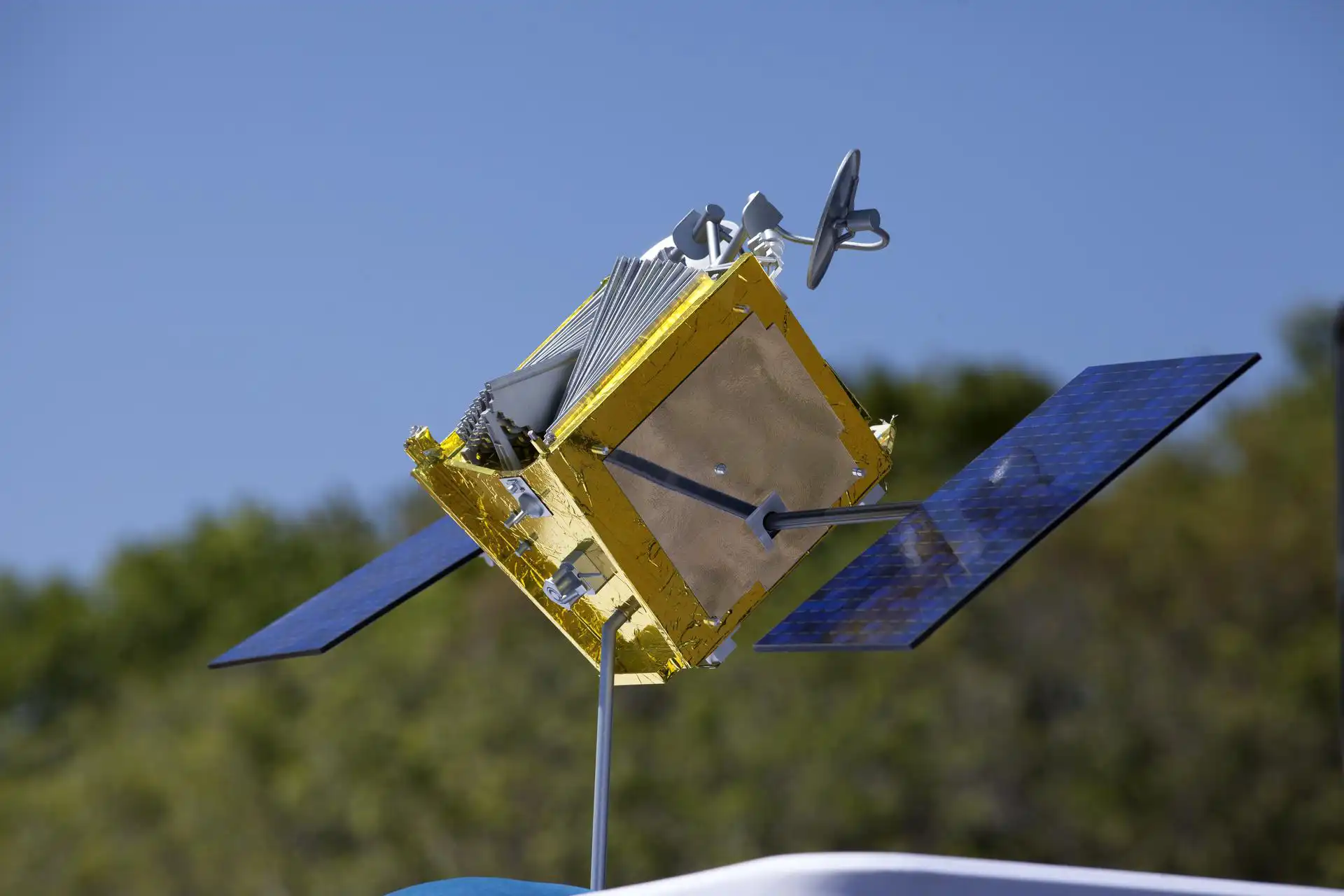
Amazon’s Project Kuiper marked a significant milestone in April with the launch of 27 customer satellites, joining the competitive race to deliver broadband internet from space. The initiative aims to deploy 3,000 satellites to bring affordable, high-speed connectivity to underserved communities worldwide.
The small satellite industry is experiencing unprecedented growth, with projections indicating an $11.28 billion expansion by 2029. This surge stems from mounting demand across three key sectors: satellite internet services, Earth observation imagery and advanced data analytics capabilities.
Amazon isn’t alone in this venture. Multiple companies are developing proprietary launch vehicles and satellite constellations, each vying for their share of orbital real estate. This competition drives innovation while accelerating the timeline for global connectivity solutions.
Behind every successful satellite launch lies a complex network of specialized manufacturers producing the critical components that make space-based internet possible. Alpha Metalcraft Group stands among the suppliers supporting this burgeoning industry with precision-engineered components designed for the unique demands of satellite technology.
The manufacturing requirements for small satellites differ substantially from traditional spacecraft. Components must be lightweight yet durable, capable of withstanding extreme temperature variations and radiation exposure while maintaining precise functionality. AMG’s contribution to this sector includes specialized products that meet these exacting standards.
Satellite internet systems, for example, require specific hardware configurations to deliver broadband connectivity. Antenna mounting brackets must maintain precise alignment despite thermal expansion and contraction cycles. Thermal management components, including heat sinks, cold shields and radiators, prevent electronic failures in the vacuum of space.
Beyond internet connectivity, small satellites serve earth observation and data analytics markets. These applications require different component and system specifications, particularly for optical systems. Data collection satellites often carry multiple sensors, each requiring custom mounting solutions. These components must maintain dimensional stability across temperature ranges exceeding 200 degrees Celsius.
The shift from traditional large satellites to constellation-based systems fundamentally changes production requirements. Where previous satellite programs might require dozens of components, modern constellations need thousands of identical parts manufactured to aerospace specifications. This scale demands both automated production capabilities and rigorous quality control systems.
Project Kuiper’s ambition extends beyond commercial success. By targeting underserved areas lacking reliable broadband infrastructure, Amazon addresses a fundamental inequality in global internet access. Rural communities, remote islands and developing regions stand to benefit most from satellite-based connectivity solutions.
The technical challenges are considerable. Satellites must maintain precise orbital positions, communicate seamlessly with ground stations and deliver consistent speeds comparable to terrestrial broadband. Success requires not just advanced satellites but also sophisticated ground equipment and robust manufacturing partnerships.
As the small satellite market continues its upward trajectory, companies like AMG play an increasingly vital role in supplying the specialized products that make these ambitious projects possible. The convergence of manufacturing expertise, launch capabilities and satellite technology promises to reshape global connectivity over the coming decade.