
In the stock market, sales, medicine or even baseball, statistics play an important role in executive decision-making. Data is more important than every in nearly every industry, especially in modern warfare. “Data is not just a byproduct,” Purvi Mysuru Niranjan Babu wrote on LinkedIn. “It is a powerful asset.”
One of the most consequential warfare developments in the past few years is the increased use of drones. “Drones Are the Biggest Military Revolution In A Century,” Forbes declared in an article in April. An article in Just Security reported drone attacks increased by 4,000 percent between 2020 and 2024, while the Modern War Institute said drones account for up to 80 percent of all battlefield casualties in Ukraine. “Drones,’’ the article said, “have indeed become indispensable military tools.”
The data on drones is driving demand for microturbine engines, which propel the small, swiftly moving aerial weaponry. The microturbine engine market is expected to grow from $4.46 billion in 2026 to $7.9 billion by 2034. North America dominates the market with a share of 39.38 percent in 2025.
There is no disputing the data: drones and microturbine engines will play a major role on battlefields in the near- and long-term.
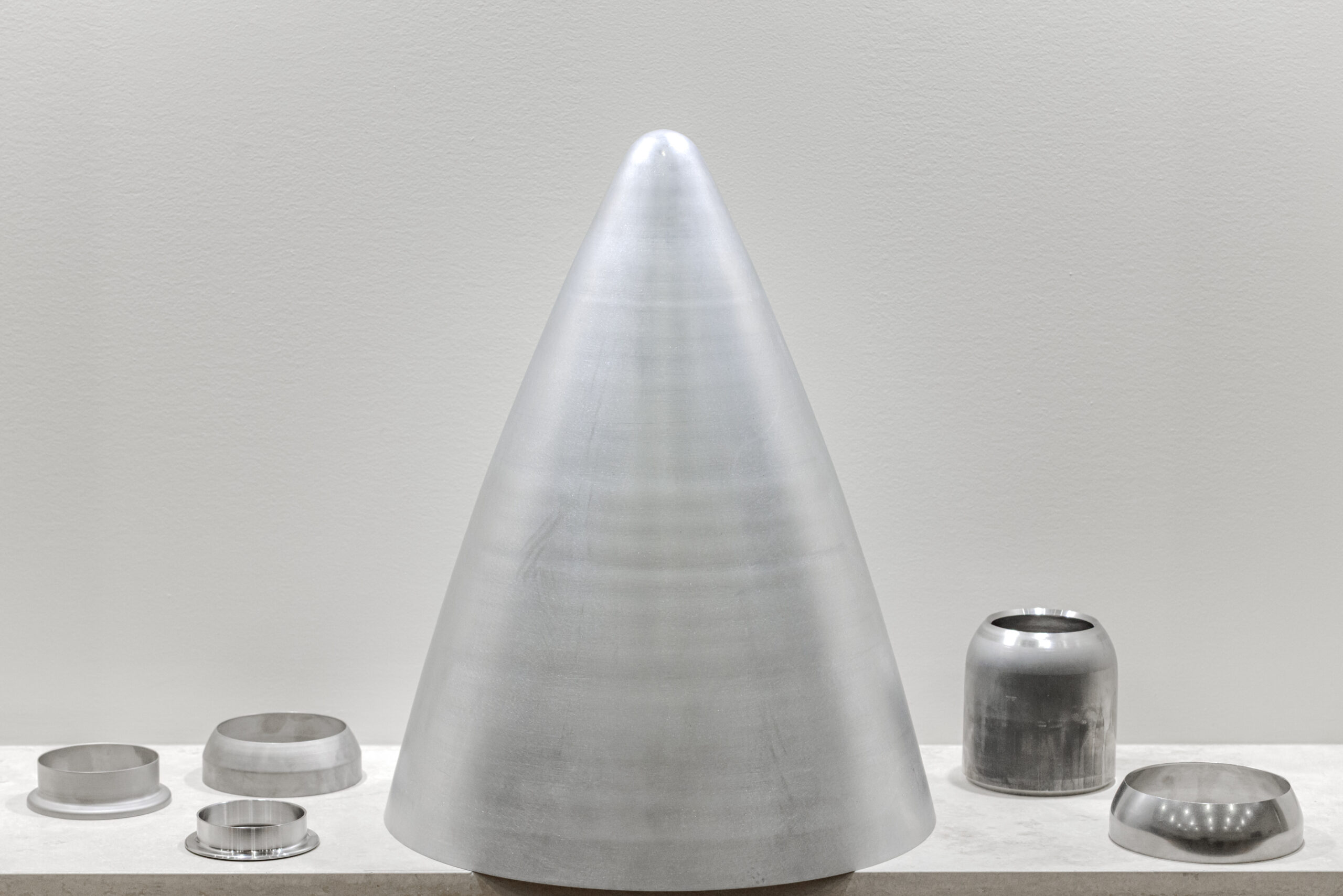
Some products that are critical to microturbine engine performance fall into the core capabilities of Alpha Metalcraft Group. Outer cases, combustor liner assemblies, exhaust nozzle assemblies, swirl plates, stator caps and rear end caps are included on every microturbine, regardless of size. The United States military classifies Unmanned Aircraft Systems (UAS) into five categories ranging in size from 20 to more than 1,320 pounds. Smaller UAVs are used for reconnaissance while the largest systems are armed with precision-guided munitions.
AMG’s capabilities in deep drawing and spinning are ideal for manufacturing the products required for microturbine engines. The engines generate extreme thermal stress, and nickel-based superalloys such as Inconel withstand extreme rotation and high combustion temperatures.
Combustor liner assemblies, for instance, which house inner and outer liners, exhaust nozzle assemblies, lobed liners and swirl plates, are manufactured with nickel, cobalt and other nickel-based superalloys that deliver superior heat and thermal resistance, corrosion protection and withstand deformation caused by centrifugal stress.
AMG also offers significant capacity to meet the demand for microturbine components. Multiple sites with single-shift operations and 600-ton deep drawing presses that can shape, stretch and straighten heavy metals make AMG well-suited to produce exotic metal, heavy gauge thickness products in significant volumes at market required economics.
While some manufacturers have turned to 3D printing for some products, the uniform grain structure and cold worked process that increases hardness make AMG’s products far superior. Deep drawing and metal spinning also deliver the advantage of manufacturing components that are unusually shaped and complex. Products can be manufactured via both processes with modest lead time and cost for custom tooling.
As the demand for microturbine engines escalates, so too will the need for the products that ensure their mission success. AMG is one of the few manufacturers that has the experience, processes and capabilities to produce these mission-critical parts.